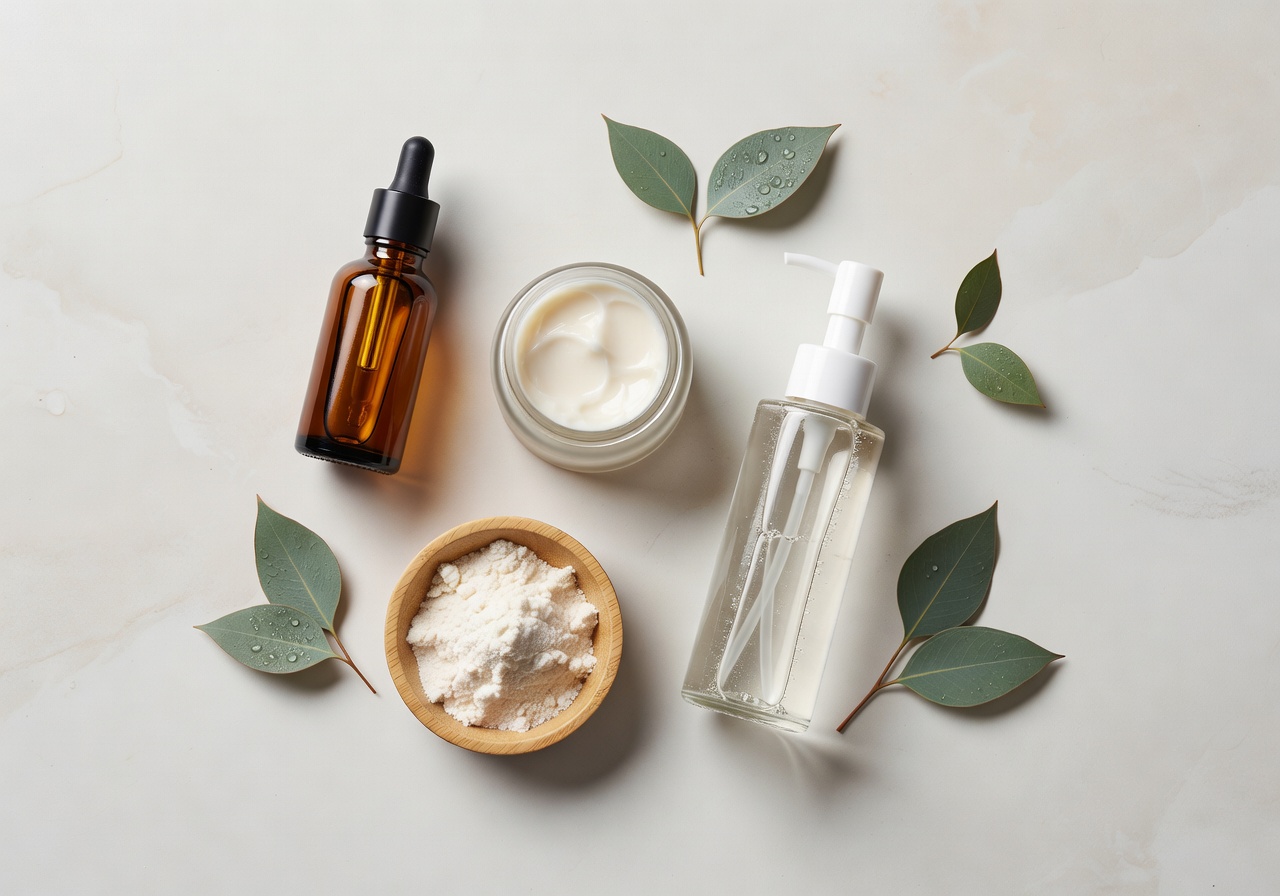
"Clean beauty" means a hundred different things to a hundred different brands. Here's what it should actually mean — and how to build a shelf that protects your skin without protecting marketing claims.
What To Look For
- Hyaluronic acid — hydration without irritation
- Niacinamide — barrier support and tone evenness
- Vitamin C (L-ascorbic acid or stable derivatives)
- Ceramides — the building blocks of skin barrier
- Retinaldehyde or bakuchiol — collagen without harshness
What To Skip
Synthetic fragrance in leave-on products. Denatured alcohol in toners. Essential oils in concentrated form. Anything with "miracle" in the marketing. The skin doesn't need theater — it needs ingredients that do what they claim.
Reading The Label
The first five ingredients are 80% of the formula. Active ingredients should appear in the top half of the list to be present in meaningful concentration. Long ingredient lists aren't automatically bad — short ones aren't automatically clean.
The Clean Beauty Myth
"Natural" isn't safer. Poison ivy is natural. The real question is: what's the evidence this ingredient works, and what's the evidence it's safe at this concentration? Clean beauty done right is evidence-based, not aesthetic-based.